01 What you'll build
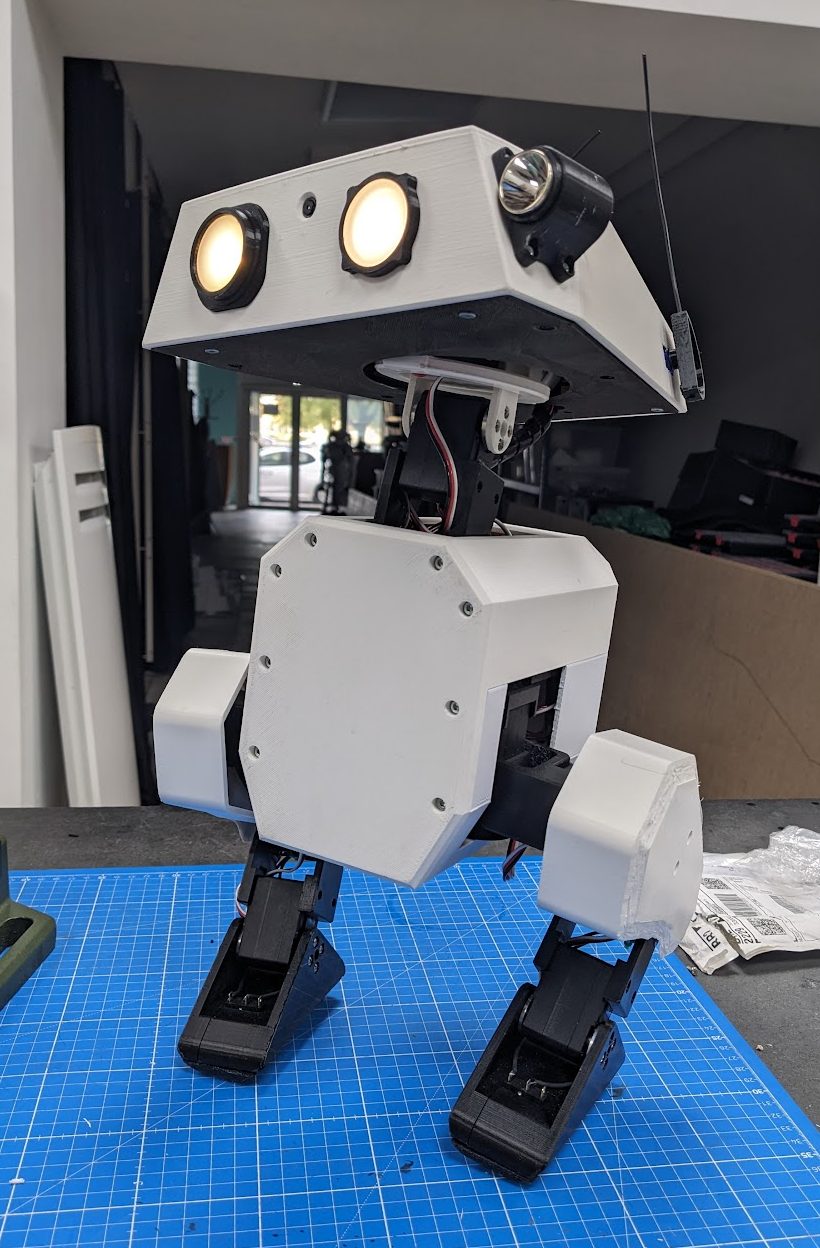
🦆 An Open Duck Mini
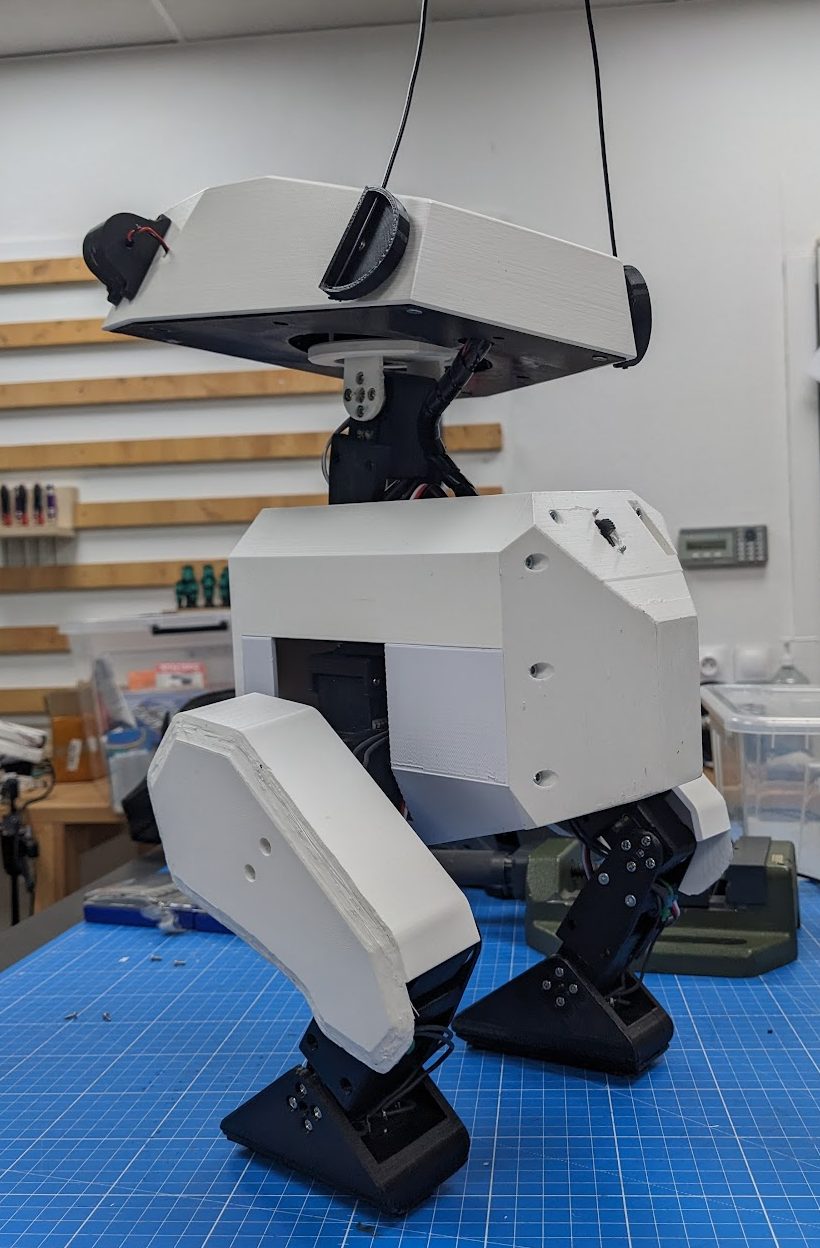
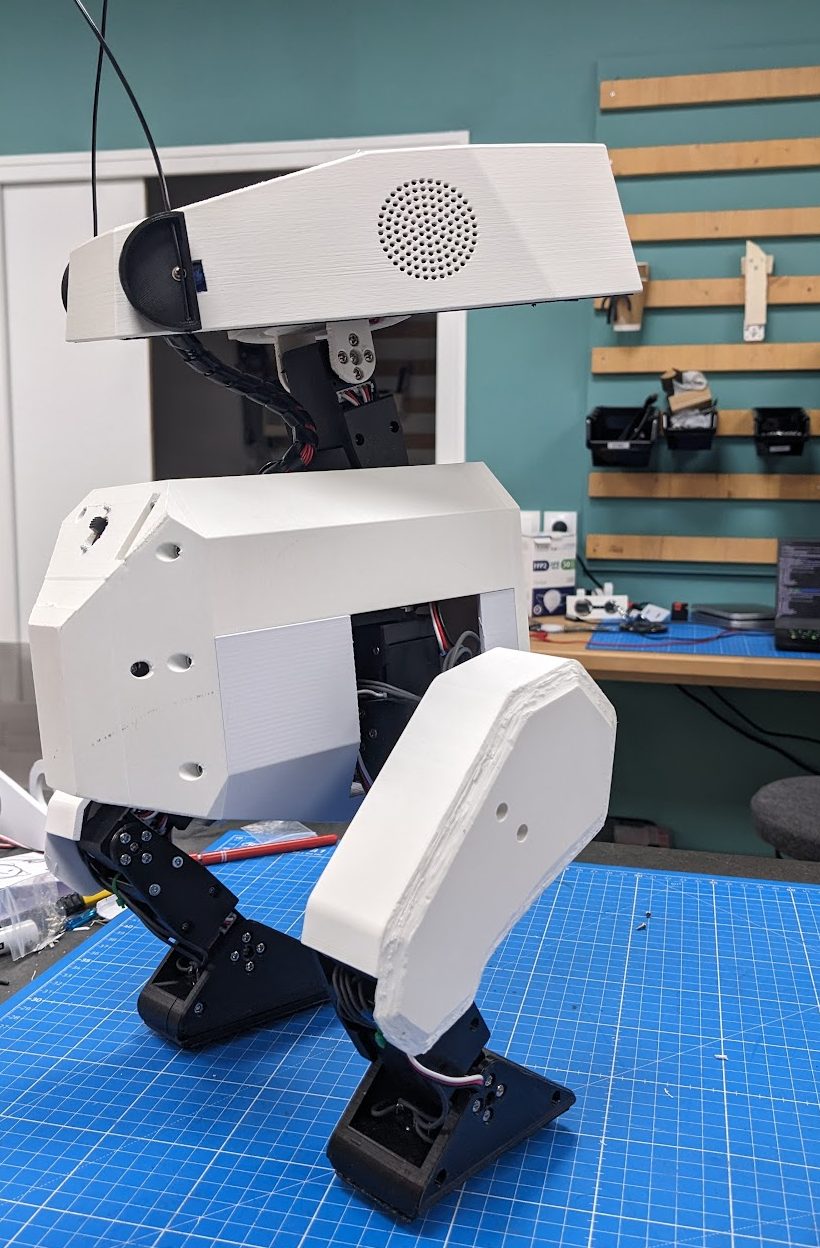
A small, expressive bipedal robot inspired by Disney's research droids, from the open-source Open Duck Mini project. It stands about 42 cm tall with legs extended and walks using a learned policy.
⚙️ The full stack
Mechanical assembly, 14 Feetech STS3215 serial bus servos, power & wiring, an IMU, and a Raspberry Pi running the brains.
🧠 Learned locomotion
You'll see how a walking gait is trained in simulation with reinforcement learning, then deploy it to your real robot and watch it take its first steps.
02 Schedule
Day 1: Body
What a bipedal robot needs: mechanics, actuators, sensing, brains. Meet your kit.
Tour the Open Duck Mini design in CAD. Learn how to read it, tweak it and export parts for 3D printing.
Clean up the pre-printed parts, fit bearings and hardware, and build the legs, hips and body.
Serial bus servos: IDs, baud rates, calibration and zeroing. Set up and test every joint on the bench.
Power distribution, battery, servo bus board, IMU. Wire it up neatly so it survives falling over.
Power on. Every joint moves on command.
Day 2: Brain
Flash the OS, network in, talk to the servo bus and IMU from Python.
Intro to reinforcement learning: simulation, reward shaping, sim-to-real. How the open-source walking policy is trained.
Load a pretrained RL walking policy onto your Pi and run it on the robot.
Gains, offsets, IMU orientation, foot contact. Debug like a roboticist.
Your duck walks. Joystick control, video, celebration.
Hacking on it at home: training your own policies, adding expressions, sensors and personality.
Timings are indicative and may shift on the day.
03 What's included
Your $2,000 covers everything. All robot parts are included, and the robot is yours to keep.
- Complete Open Duck Mini parts kit: 3D-printed parts, Feetech STS3215 servos, servo driver board, IMU, Raspberry Pi, battery and all hardware
- Two full days of hands-on instruction in a small group
- Tools, workbench and soldering gear on the day
- Lunch, snacks and coffee both days
- Pretrained walking policy, plus course notes and links to take further
- The finished robot to take home and keep
04 Who it's for
Curious makers
You've printed a thing or flashed an Arduino and want a real robotics project.
Engineers & devs
Software people who want hands-on hardware, and hardware people who want to try RL.
Educators & teams
Teachers, uni students and company teams after a fun, deep build day. Book multiple seats.
05 FAQ
Do I need experience?
No robotics experience needed. If you're comfortable following technical instructions and have used a computer terminal a bit, you'll be fine. Experienced makers will still get plenty out of it.
What does the $2,000 cover?
Everything. All the robot parts are included in the price: printed parts, servos, electronics, Raspberry Pi, battery and hardware. Plus two days of instruction, tools on the day, and lunch. You keep the robot you build.
Do I keep the robot?
Yes. The robot you build is yours to take home and keep hacking on.
How do I pay?
Pay an A$500 early bird deposit (or A$2,000 in full) securely online by card via Stripe. If online payment isn't open yet, register interest and we'll email you a payment link. Your seat is confirmed once the deposit is paid. Prices include no GST.
When and where?
In person in Sydney, NSW. Cohort dates are TBC. Book now and we'll confirm dates and the exact venue by email.
What should I bring?
A laptop (Windows, macOS or Linux) and curiosity. We'll supply tools, parts and coffee.
Is this affiliated with MIT or the Open Duck project?
No. How to Build a Robot is an independent course run by DreamMachina. It builds on the open-source Open Duck Mini project (apirrone/Open_Duck_Mini) and isn't affiliated with or endorsed by MIT, the Open Duck authors or any university.
06 Book a seat
AUD $2,000 per person, all robot parts included. Small cohorts in Sydney, dates TBC.
5–6 Dec 2026 · provisional cohort
Reserve your seat for the first Sydney cohort via Luma.
Book on LumaAlso on Facebook event · Facebook page